


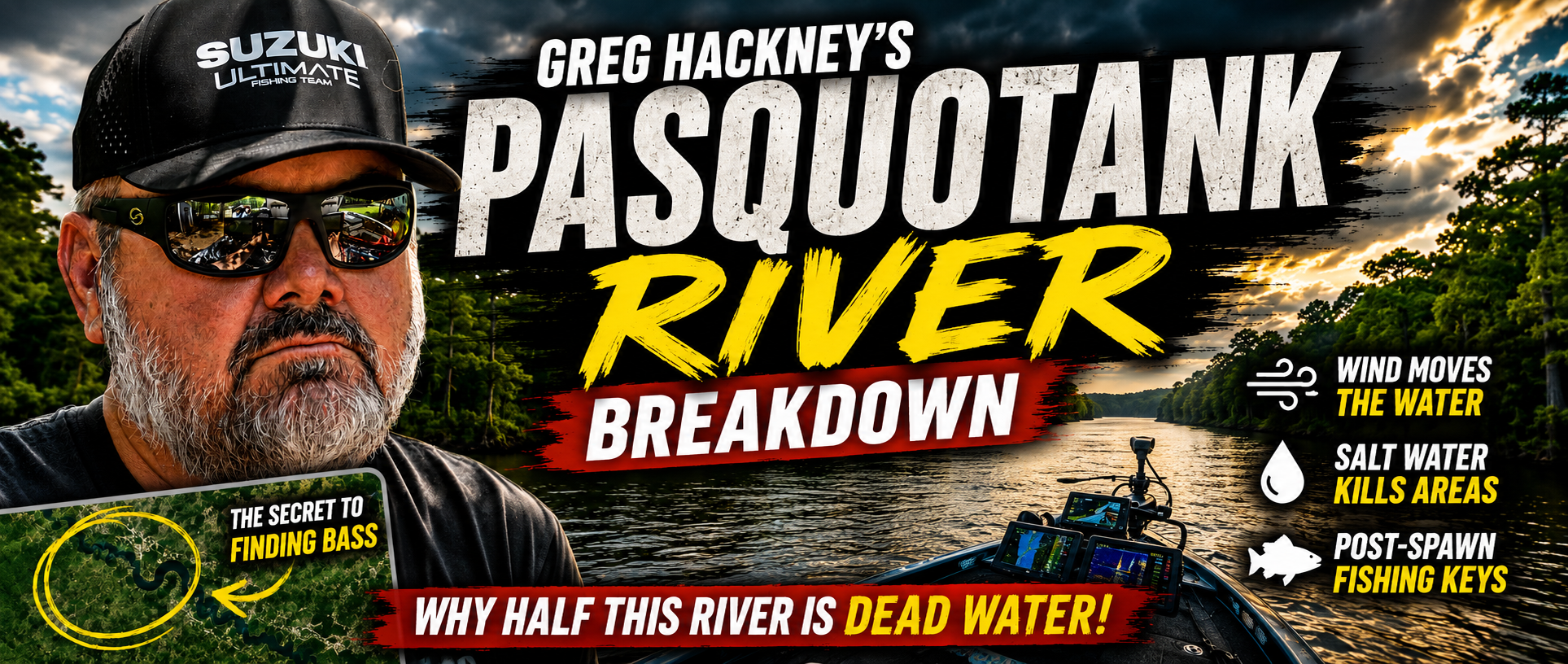
Imagine showing up to a fishery with hundreds of miles of fishable water. Creeks. Cypress trees. Grass beds. Endless shoreline. Most anglers see opportunity. Greg Hackney sees a process of elimination. Because on the Pasquotank River, the biggest challenge isn't finding bass. It's finding the right water.
Not Every Mile of River Holds Bass One of the biggest misconceptions about the Pasquotank River is that every stretch of shoreline is equally productive. It isn't.
The river is connected to the Albemarle Sound, creating a dynamic system where wind, water movement, and salinity can completely change how bass use the fishery. Hackney knows that before he starts looking for fish, he has to determine which sections of the river are even worth fishing. In a tournament where ounces matter, wasting time in dead water can end your week before it begins.
Wind Controls Everything
Most anglers hear the term "tidal fishery" and immediately think about tide charts. But on the Pasquotank, wind is often the bigger factor. A sustained wind can push water into parts of the river, flood shallow cover, dirty the water, or pull water out of key areas altogether. Conditions can change dramatically overnight. The spot that looked perfect yesterday may be completely different this morning. Hackney understands that bass don't react to maps. They react to conditions. And when the conditions change, the fish move with them.
Fresh Water Matters
Another critical factor is salinity. The Pasquotank may be a river, but it's part of a larger estuarine system. Certain areas can experience increased saltwater influence depending on wind direction and water flow. Largemouth bass want stable freshwater conditions. That means one of the first things experienced river anglers look for is healthy water. Clean water. Good vegetation. Active baitfish. Life. If those ingredients aren't present, Hackney isn't wasting time there.
The Spawn Is Over
With the spawn behind them, bass are no longer locked onto beds. They're transitioning. Some are moving toward grass edges. Others are setting up around cypress trees, creek mouths, or feeding areas where bait is abundant. The challenge isn't locating one fish. It's finding where groups of fish are repositioning after the spawn. That's where Hackney's river experience becomes a major advantage. The Hackney Method Greg Hackney has built a career on fisheries where changing conditions dictate everything. He isn't trying to fish the entire river. He's trying to shrink it. Eliminate unproductive water. Find the freshest water. Find the cleanest water. Find the bait. Find the areas least affected by changing conditions. Once those pieces come together, a massive river system suddenly becomes manageable.
The Pasquotank River isn't a place where anglers simply run down the bank and catch fish. It's a puzzle. Wind moves the water. Salinity changes the playing field. Post-spawn bass are constantly repositioning. And that's why anglers like Greg Hackney are so dangerous on fisheries like this. They're not looking for bass first. They're looking for the right water. Because on the Pasquotank River, finding the right water is often the first step toward finding the winning fish.